Early Signs of Scoliosis in Children Parents Should Know
Learn the early signs of scoliosis in children, when to arrange an evaluation, and what parents should know about monitoring, bracing, and ongoing care.
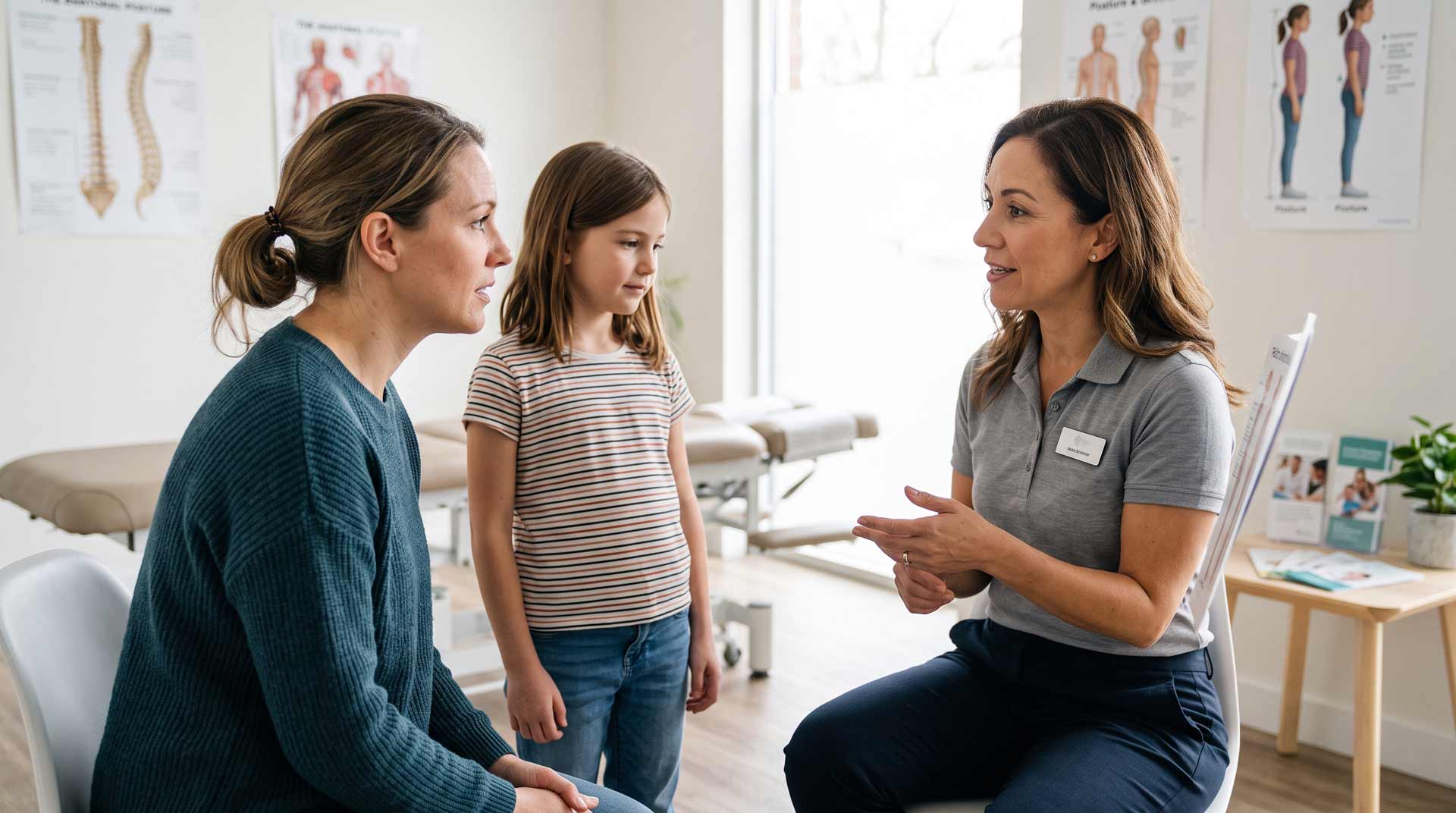
A shoulder that sits higher or a shoulder blade that stands out can be easy to miss until a child changes into a swimsuit. These small differences may signal early scoliosis in children, along with an uneven waist, uneven hips, or ribs that appear more prominent on one side. Mild scoliosis often causes no pain, so a child can feel completely well while a curve develops.
Key Takeaways
- Uneven shoulders, shoulder blades, hips, or ribs can be reasons to arrange an evaluation.
- A painless back does not rule out scoliosis.
- Appearance alone cannot confirm a spinal curve or show how serious it is.
- Growth remaining and curve size help guide decisions about monitoring and treatment.
- A scoliosis diagnosis does not automatically mean a child needs a brace or surgery.
What Visible Changes Could Be Signs of Scoliosis?
Scoliosis is a sideways spinal curve. The spine can also rotate, which helps explain why changes may show up around the ribs, shoulders, and waist. Parents don't need to see a visible S-shaped curve before asking a clinician to check a concern.
Uneven shoulders or shoulder blades
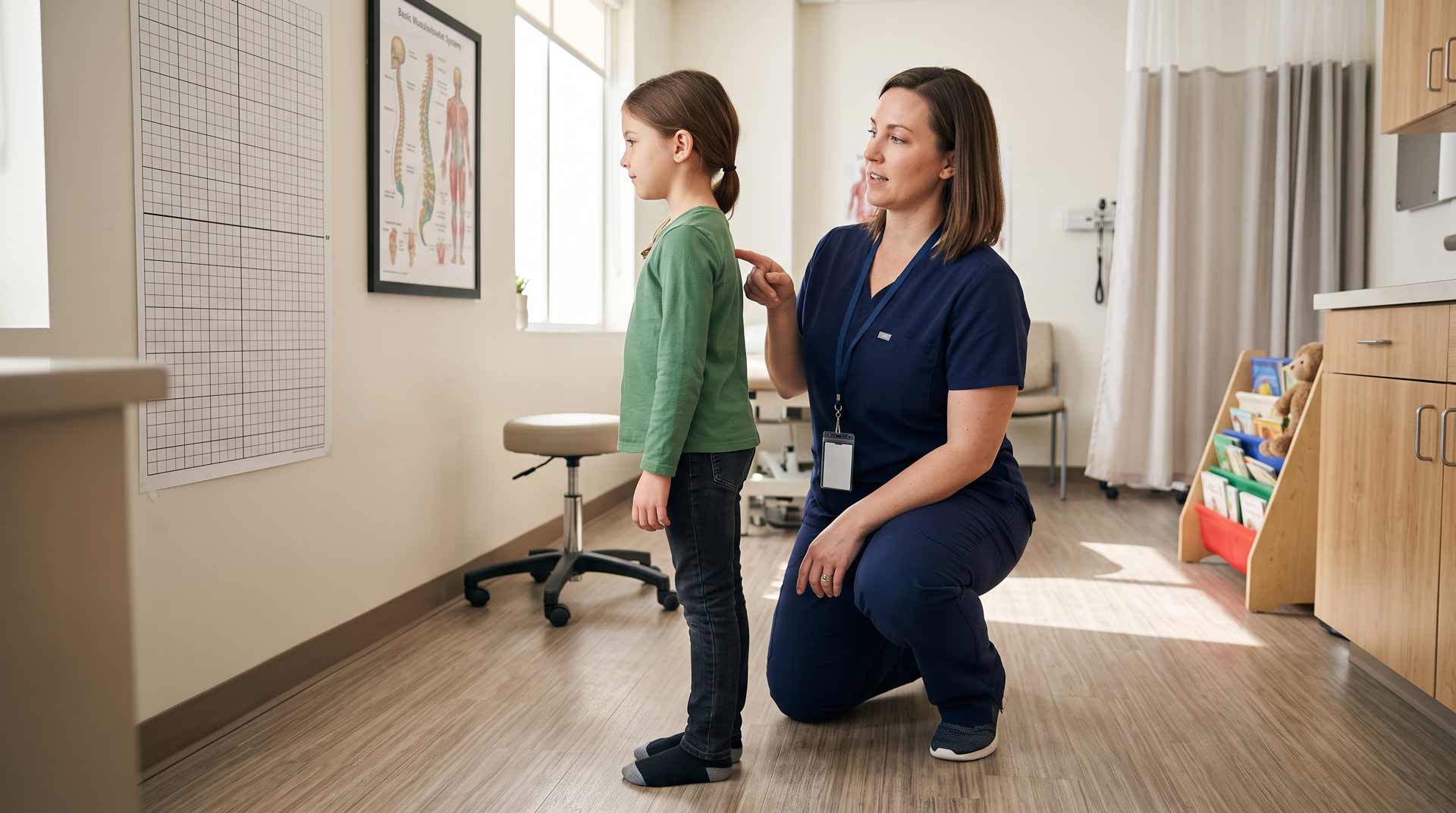
One shoulder may rest higher than the other when a child stands comfortably. From behind, one shoulder blade may look more prominent. If you notice a difference, describe it at an appointment rather than asking your child to repeatedly pull their shoulders into a different position.
A change in the waist or hips
One side of the waist may look straighter, while the other has a deeper inward curve. A hip may appear higher or stick out farther. There may also be more space between one arm and the waist when both arms hang naturally.
These observations concern body symmetry. They do not tell you the size of a spinal curve, and an uneven appearance does not establish a diagnosis.
Ribs that stand out on one side
Rotation of the spine can make one side of the rib cage more prominent. This difference may be easier to see when a child bends forward.
A sideways lean through the torso can also occur, making the upper body appear shifted over the hips. A child may have several noticeable changes or only one subtle sign.
Can a Child Have Scoliosis Without Back Pain?
Yes. Mild scoliosis frequently causes no pain, and children may continue school, play, and sports without reporting a problem. Waiting for discomfort can therefore delay recognition.
Pain also does not prove that scoliosis is present. A child with a spinal curve can have back pain for another reason, so symptoms deserve their own assessment.
Contact a doctor promptly if back pain is severe, keeps your child awake, or occurs with fever, weakness, numbness, or difficulty walking. These findings need medical evaluation rather than being attributed to ordinary posture changes.
Why Does Scoliosis Develop During Childhood?
The most common form in older children and teenagers is idiopathic scoliosis. “Idiopathic” means the exact cause is unknown. It often becomes noticeable around puberty, when a child is growing quickly.
Family history can play a role, so tell your child's clinician if a parent or sibling has scoliosis. Other forms can involve differences in how spinal bones developed before birth or conditions affecting nerves and muscles.
Poor posture and carrying a heavy backpack do not cause idiopathic scoliosis. Parents do not need to blame a child's sitting habits, and children should not feel that they caused the curve by slouching.
Age also matters. Scoliosis present before age 10 is called early onset scoliosis. Younger children need an assessment that considers their remaining growth and the possible cause of the curve. Do not dismiss a visible change simply because your child has not reached adolescence.
When Should Parents Arrange an Evaluation?
Contact your child's pediatrician when you notice uneven shoulders, a prominent rib area, or another unexplained change in symmetry. You do not need to wait until the next annual visit if a new concern has appeared.
Posture can temporarily change how the back looks. For example, standing with one knee bent can tilt the pelvis. A structural scoliosis curve does not simply disappear with a change of position. A clinician can assess this distinction; a photograph or home check cannot.
Write down what you noticed and when. Mention recent growth, pain, existing medical conditions, and family history. This gives the clinician useful context without requiring repeated home inspections.
For families seeking local care, Lake Nona Chiropractic offers scoliosis evaluations in Lake Nona. Keep your child's pediatrician involved, including any recommended referral to a pediatric spine specialist.
How Does a Clinician Check for Scoliosis?
Medical history and physical examination
The appointment usually begins with questions about growth, health history, symptoms, and scoliosis in the family. The clinician examines the child's back and body symmetry and may check movement, leg length, strength, and reflexes.
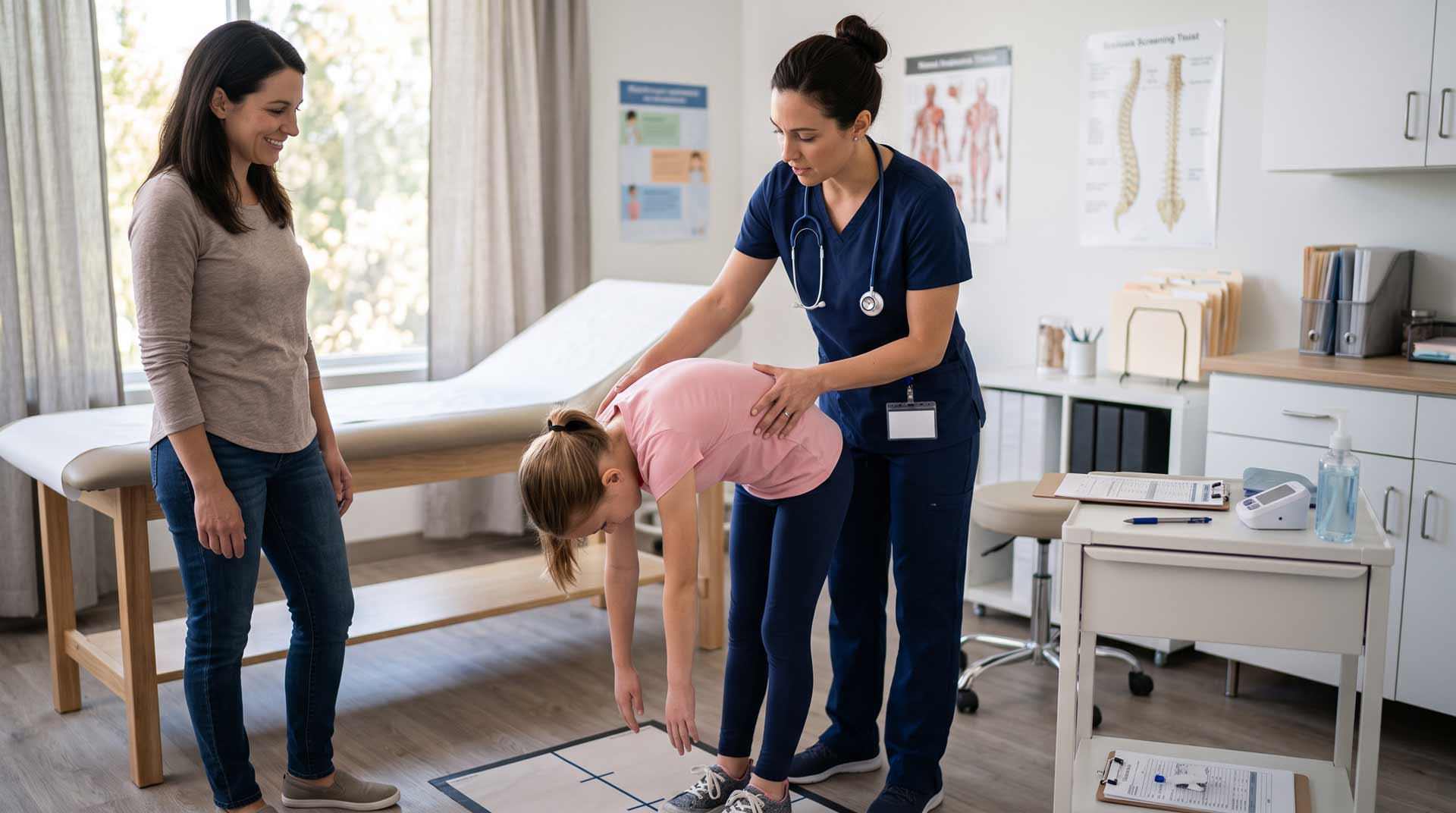
During an Adams forward bend test, the child bends forward while the examiner looks for a difference between the two sides of the back. A small instrument called a scoliometer may help assess trunk rotation. This screening step does not replace an X-ray measurement of the spinal curve.
Imaging when a curve is suspected
If the examination suggests scoliosis, standing spinal X-rays can show the curve's location and size. Clinicians use the Cobb method to measure the curve in degrees. Ask what imaging is needed and how the results will affect the next step.
Before leaving, make sure you understand whether scoliosis was confirmed, whether a specialist should assess your child, and when follow-up is due. If an explanation feels unclear, ask the clinician to show you what they found and explain it in everyday language.
What Happens If Scoliosis Is Confirmed?
The plan depends on the curve's size and location, whether it is changing, and how much growth remains. Children with different findings may need very different care.
Monitoring a mild curve
Some children need scheduled observation of a mild curve. Follow-up visits, sometimes including X-rays, allow the clinician to check whether the curve is stable or increasing. Reconsider treatment if findings change. Ask when your child should return and what changes should prompt an earlier call.
Considering a brace during growth
A brace may be recommended for a growing child whose curve has reached a size or progression pattern that warrants treatment. Its main purpose is to reduce the likelihood of further progression.
Wearing a prescribed brace for the recommended hours is important to its effectiveness. Brace selection and wear schedules should be tailored to you. Talk with the care team about comfort, school routines, and any difficulties following the plan.
Understanding exercise and specialist care
Physical therapy can build strength, and scoliosis-specific exercises may be part of a child's care. Ask what the exercises are intended to achieve and how they fit alongside monitoring or bracing.
Exercise is not a guaranteed way to straighten a spine. Chiropractic adjustments have not been shown to reduce scoliosis curvature or prevent its progression. They should not replace prescribed bracing or follow-up with the child's scoliosis care team.
Lake Nona Chiropractic offers custom bracing and scoliosis-specific exercise services. Whether either is appropriate depends on the child's findings. Larger or progressing curves may require assessment by a pediatric orthopedic spine specialist, including discussion of surgery when indicated.
How Can Parents Support a Child Through the Process?
Keep conversations calm and practical. Explain that the appointment is about checking how their back is growing. Give your child space to ask questions privately and avoid repeatedly commenting on their appearance.
If treatment is recommended, ask which parts of daily life need adjustment. Most children with scoliosis can remain active, although individual instructions matter. Regular exercise supports general fitness; discuss sports participation with the treating clinician.
Listen if your child worries about clothing, classmates, or wearing a brace. These concerns deserve attention. If brace wear becomes difficult, contact the care team so they can address the problem. Scoliosis support groups for children, teens, and parents can also help families manage the emotional side of treatment.
Frequently Asked Questions
Does one uneven shoulder always mean scoliosis?
No. A shoulder-height difference is a reason to look more closely, but it cannot confirm scoliosis. A clinician considers the whole examination and uses imaging when appropriate to determine whether a spinal curve is present.
Can scoliosis develop after a normal school screening?
Yes. A normal screening describes what was found at that time. Adolescent scoliosis can become apparent later as a child grows. Have a new visible change assessed even if an earlier school screening or checkup was normal.
Will a child grow out of scoliosis?
Do not assume so. Some very small curves improve, while others remain or progress. Growth remaining and curve size influence what happens next. Keep the recommended follow-up appointments even when your child feels well.
Should siblings be checked if one child has scoliosis?
Tell their pediatrician about the family history. Scoliosis can run in families, and siblings can be checked during routine examinations, particularly around growth spurts. Having an affected sibling does not establish that another child has the condition.
Does a scoliosis diagnosis mean surgery is likely?
No. Many children have mild curves that need monitoring, and some benefit from bracing during growth. Surgery is considered for selected larger or progressing curves. The recommendation depends on the individual child's examination, imaging, and growth.
Get a Clear Answer About Changes You Notice
You do not have to determine the cause of an uneven shoulder or rib prominence at home. An evaluation can clarify the finding and establish whether your child needs follow-up, treatment, or specialist care.
If you have noticed a change in your child's back, contact Lake Nona Chiropractic to ask about a scoliosis evaluation. Bring your observations and questions so the conversation can focus on what your child needs next.
Keep reading - related care
More from the blog
A Holistic Approach to Treatment With ScoliCare
When it comes to managing scoliosis, no one-size-fits-all approach exists. Each case is unique, with factors like age, severity, and curve type playing a role in determining the best treatment...
ScoliosisGrowth Modulation in AIS: A Non-Surgical Approach to Reversing Scoliosis with ScoliBrace
Understanding Adolescent Idiopathic Scoliosis (AIS) and Growth Modulation